 ×
×
Aging for the Decades,
built.
You sent us the vision. Here are our answers to the seven questions on your last slide — and how we would build the site around The CAM Decade Plan™.

Making the decades the center of the site
Your philosophy becomes the navigation. Not a menu of treatments, but a question every patient already asks: what should I be doing right now?
Each decade is its own editorial page: education first, priorities, the treatments that serve them, and one invitation to consult. Patients self-select. Google indexes five distinct pages instead of one.
It becomes the second call to action, everywhere. Book a Consultation for patients who are ready; Build My Decade Plan for patients who are still deciding. The second one is a short guided form — decade, goals, history — that arrives with them at the consultation, so the visit starts halfway done.
After the visit, the plan is delivered as a designed document with your name on it. That artifact is the thing patients keep, share, and come back for. No competitor in this market hands anyone a plan.
Yes, and it is not a compromise. The decade pages are written for patients. Individual treatment pages — injectables, lasers, biostimulators, metabolic — are written for search, because that is what people type. The two cross-link: a decade page recommends treatments, a treatment page notes which decades it serves.
You get an experience that feels like a philosophy and a site structure that behaves like a catalogue underneath.
Your own slide already answers it: healthy aging from the inside out. One philosophy statement at the top of the page, two columns underneath, identical voice and typography in both. They are not two services. They are one belief expressed two ways.
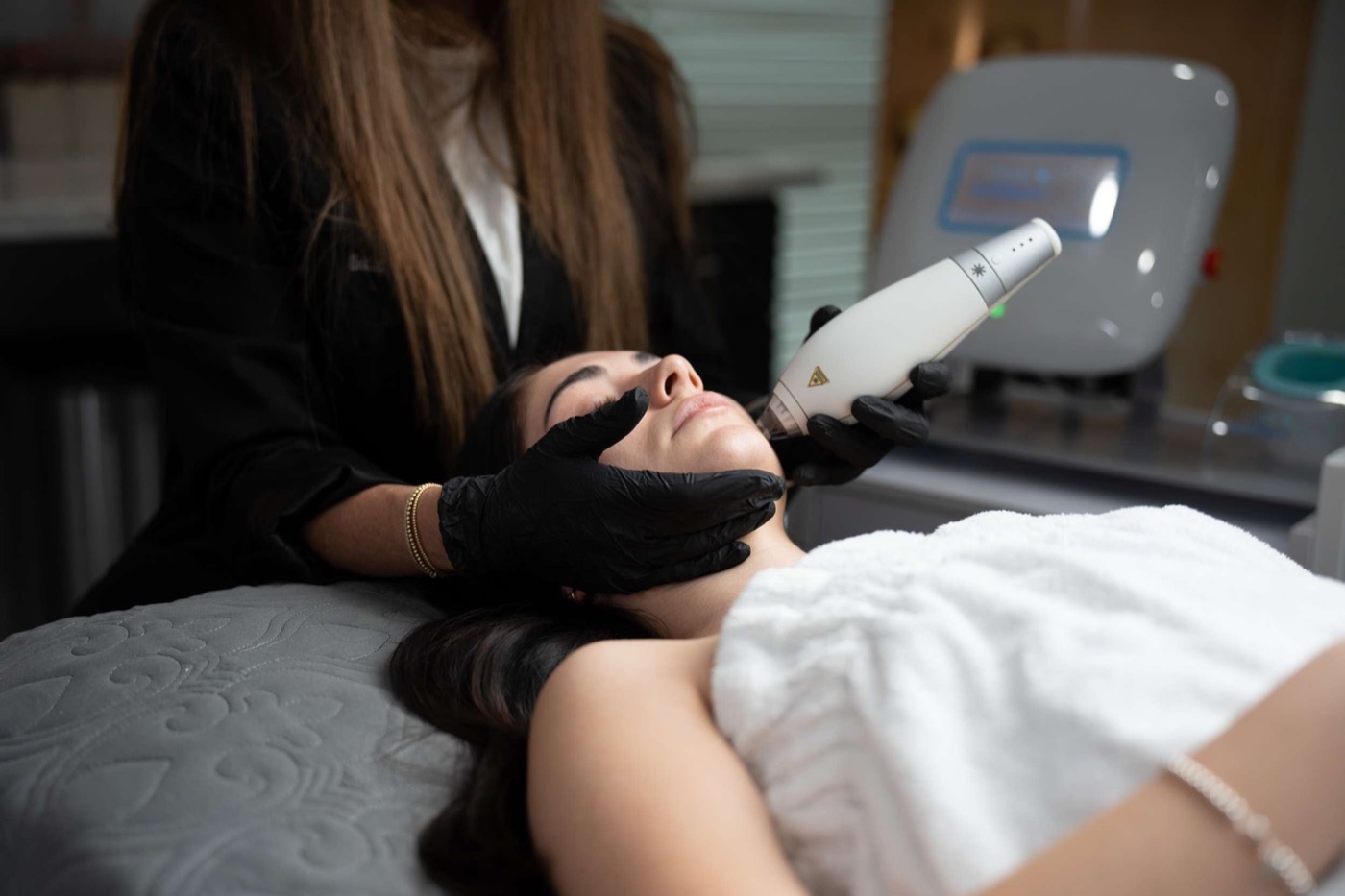
This is the part that decides whether the site feels editorial or feels like a med spa. Stock imagery would undo everything else. What the site needs: you in the room, real texture and light, hands and detail, unhurried portraits of the team, and short silent motion for the header.
We shoot it. Our studio is ten minutes from your office and this is what we do.

Mindbody's API supports this directly, so booking stays inside your existing system and nothing about your front-desk workflow changes.
What you should be able to edit yourself
This is the one question that changes how we build, so it is worth deciding together.
Hand-built, with the changing parts editable
The site itself is built by hand — faster, more beautiful, and impossible to make generic. Then the pieces that actually change (before and afters, specials, journal entries, provider bios) connect to a simple editor you use without touching the design.
Hand-built, we handle changes
Same site, and you send us updates as they come. Simplest arrangement, and most practices prefer it once they see how rarely the core pages change.
Changes rarely. Protects the brand.
Log in, upload, publish. Nothing can break.
The design lives in code, so it cannot be dragged out of alignment. The content that changes lives in a simple editor with labeled fields. Same amount of work to build, and you never wait on us for a new before-and-after.
What we would not recommend is a template platform. It is the reason most aesthetic websites look like each other, and your brand is already too specific for that.
“I can trust CAM to help me age well
without losing what makes me look like me.”
That is the feeling you wrote down. Everything above exists to produce it.
×